The SpaceX IPO: What the average employee may have left on the table

3 min
0 result
San Francisco native (yes, really). @uw and Lowell High alum. I like to nerd out on fintech, stock options and taxes.
Congrats to all SpaceX employees 🥳
Today was the SpaceX IPO. The first day of trading is over and shares started trading at $135.
Employees and executives who built the company must be excited. While the share price will change before they can sell their shares (after the lock-up period), being part of the biggest IPO in history is a huge accomplishment in itself.
But for a lot of them, the celebration can be bittersweet.
Because the moment an IPO happens, the window for the biggest tax planning opportunities usually closes. And for employees who waited too long to exercise their stock options, there is a real tax consequence that could result in millions of upside lost. They just didn't know it yet.
This isn't about whether SpaceX was a good bet or a successful outcome. This is about the gap between what employees could have kept and what they'll actually take home after taxes.
If you’re a SpaceX employee or someone from a company who you think will IPO soon, read on for:
Secfi helps startup employees and executives with their equity through scenario modelling, 1:1 guidance, non-recourse financing, and employee education. Try our free AI equity assistant Maeve.
For employees working at SpaceX and similar late-stage startups, there is one big decision: When should I exercise my stock options?
It's the million-dollar question (sometimes, literally). It's also difficult to answer as there are so many factors to consider. Unsurprisingly, many employees end up defaulting to doing nothing.
But that decision rarely brings the best results. Stock options – particularly ISOs – can have major tax benefits if you exercise early. Assuming your company (and 409A) continues to grow, exercising earlier means:
That's because your taxes at sale get converted to long-term capital gains, which is a lower tax rate, as long as you meet the holding requirements: sell at least one year after exercising your ISOs, and at least two years after your employer granted them.
But what does this actually look like for the employees living through the SpaceX IPO?
We’re going to use rounded numbers for our SpaceX IPO case study. Note that all of these are just examples, and you should speak with a tax professional before making any decision.
One SpaceX employee decides when to exercise at different points of time. Completely different outcomes, determined entirely by when they chose to act.
This employee joined SpaceX around 2019. She is a California resident granted 100,000 ISOs at a $4.40 strike price (adjusted for the recent stock split).
In 2024, with the 409A at $30, she exercised and paid $440k to SpaceX for the strike price plus roughly $924k in taxes, totaling about $1.4M. With the IPO still years away at that point, she locked in long-term capital gains treatment for when she eventually sells. The government got their cut early, and a smaller cut at that.
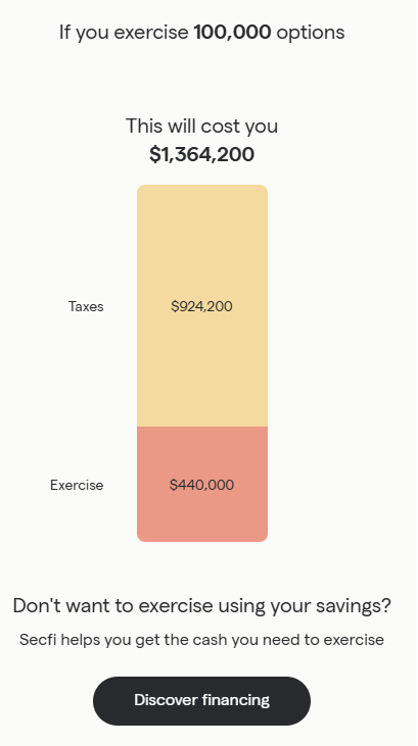
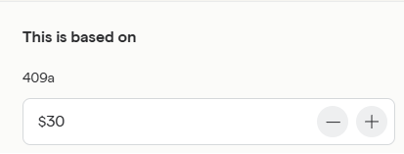
For illustrative purposes only. Actual results may vary and there is no guarantee of any particular outcome. Assumptions: CA resident, married filing jointly, $200k base income.
Let’s say she decided to hold off. Earlier this year in 2026 with the 409A at $105, she exercised her options. Her tax bill came to over $3.5M, roughly three times what she would have paid in 2024. Compared to exercising in 2024, she paid an extra $2.6M to the government for the same shares.
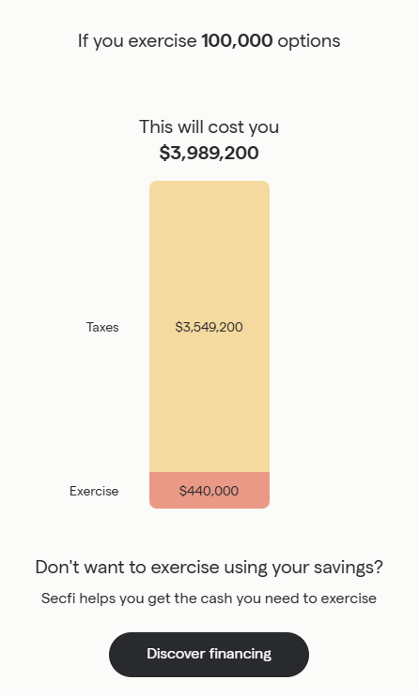
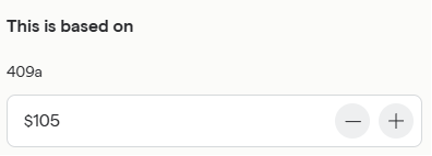
For illustrative purposes only. Actual results may vary and there is no guarantee of any particular outcome. Assumptions: CA resident, married filing jointly, $200k base income.
Why exercise your options early: tax savings of ~$2M
As tough as you think this employee has it for paying over $3M in taxes, she’s still likely in better shape than someone who chooses not to exercise. That is because with ISOs, you get preferential tax treatment if you exercise the options and hold for at least one year before selling the shares. You can effectively convert all the gains above the strike price to long-term capital gains tax rates at ~37% compared to ordinary income tax rates of ~52% (combined Federal and California rates).
By exercising earlier this year, she paid lower taxes on exercise compared to the IPO price, and also started the clock on the preferential tax treatment. Voluntarily paying almost ~$4M to exercise her stock options sounds like a crazy idea, but let’s see why someone would want to do this.
For illustrative purposes only. Actual results may vary and there is no guarantee of any particular outcome.
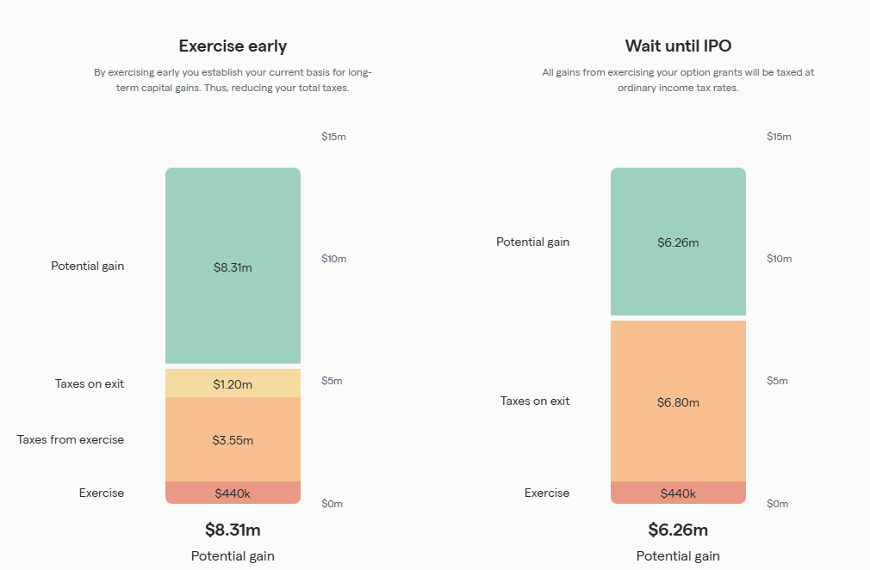
As you can see on the left, the employee who exercised and held a year before selling at the IPO price of $135 came out with ~$8.31M after taxes compared to someone who did a cashless exercise effectively exercising and selling the same day resulting in a gain of ~$6.26M.
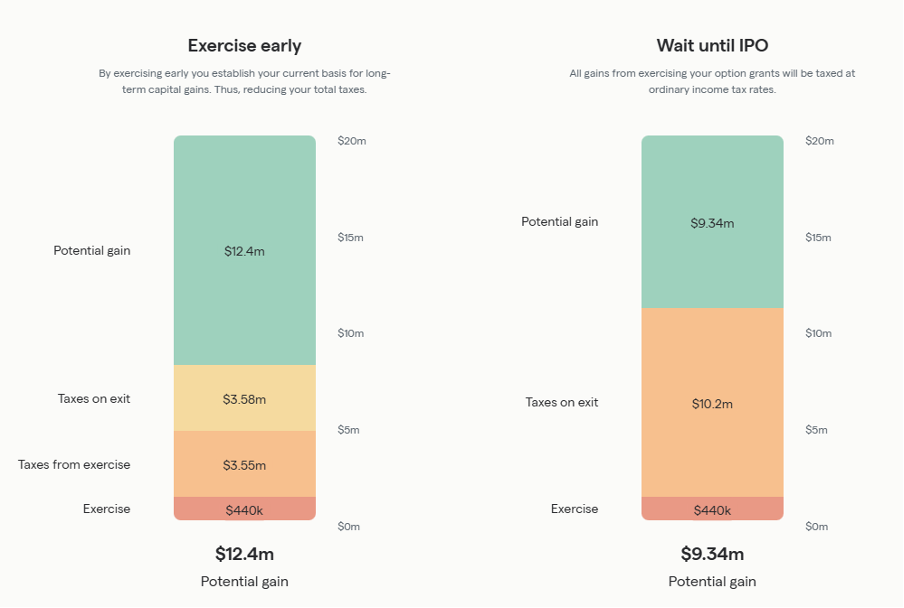
Let’s say that in the next 6 months, the stock price continues to climb up to $200 per share and the employee decides to sell her shares.
For illustrative purposes only. Actual results may vary and there is no guarantee of any particular outcome.
In this case, she’ll sell her shares for $20M, pay long-term capital gains tax on all the appreciation above the strike price, and recover the previous alternative minimum tax (AMT) she paid resulting in a potential gain of ~$12.4M. Compare that to paying ordinary income tax on the full $20M which results in a ~$9.3M gain.
Both are great outcomes of course. Most people do not get the chance to work for a company that goes through a major IPO, yet alone get to a multi-million dollar payout, but millions of dollars in an extra tax bill is a hard pill to swallow.
Of course, the decision to write the check to exercise is a difficult one and not every company will have a great outcome like SpaceX, but if you are on a rocketship (sorry, I had to) then you should at least consider the thought of exercising especially given SpaceX’s regular tender offers in the past.
If you work at a late-stage private company that could go public in the next few years, the SpaceX IPO is a reminder to start planning now. Once IPO rumors start, your company’s valuation may already be much higher than it was when you received your grant, which can make exercising more expensive and potentially increase the tax bill.
That doesn’t mean exercising early is always the right move. Exercising stock options is an investment decision, and private company outcomes are never guaranteed. But it does mean you should model the tradeoffs early: what it could cost to exercise now, how much tax you may owe, what waiting could change, and how much cash you’re comfortable risking.
That’s where Secfi can help you out.
Secfi was built for exactly the type of decision employees faced around the SpaceX IPO. Our founders had to walk away from millions in equity when he left a former company because exercising was too confusing and expensive, and he didn’t want it to happen to others.
That experience shaped Secfi’s approach: bring financing, equity planning tools, and strategic support into one place. So you know where to go for what could be one of the biggest financial decisions of your life, instead of piecing together advice from coworkers, Claude, spreadsheets, and well-meaning tax professionals who don’t specialize in equity.
Here are three reasons employees and Executives from the leading pre-IPO companies work with Secfi:
The biggest barrier to exercising stock options is usually the upfront cost. You may need to pay the strike price, potential AMT, and other taxes before you can sell your shares.
Secfi’s non-recourse financing can help eligible employees cover the cost to exercise and associated taxes without putting your personal assets at risk. If your company has a successful liquidity event, such as an IPO or acquisition, you repay the amount financed plus a fee. If your company doesn’t exit or the shares become worthless, Secfi takes the loss.
That can give you a way to exercise earlier and potentially keep more upside, without draining personal savings or taking on a traditional loan. Non-recourse financing also doesn’t impact your debt-to-income ratio, so it won’t limit your ability to make major purchases in the future such as a house.
A headline IPO valuation can be exciting, but it doesn’t tell you what your equity may actually be worth after taxes, exercise costs, lockups, and sale timing.
Maeve, Secfi’s free AI equity planning assistant, can help you model different outcomes before making a decision. You can explore scenarios like exercising before IPO, waiting for a cashless exercise, selling after lockup, holding longer, or exercising only part of your options.
That makes it easier to understand the tradeoffs before you commit cash, trigger taxes, or default into a decision you didn’t fully choose. Maeve also keeps up with the latest 409A valuations and live data from secondary markets to provide a current view of your portfolio's potential value.
And if you’re already using Carta, you can connect with Maeve directly without inputting your information manually.
For illustrative purposes only. Actual results may vary and there is no guarantee of any particular outcome.
Startup equity can get complicated quickly, especially when you’re dealing with ISOs, NSOs, AMT, lockups, liquidity timing, and concentrated stock risk.
Secfi’s team works specifically with startup employees and executives navigating equity decisions. They can help you understand your equity, compare your options, and think through how different paths may affect your taxes, liquidity, and long-term upside.
Our wealth team can also help you put together the best plan so your equity fits into your broader financial goals.
If you’re an executive or work in HR, we also provide equity education for your whole company, so employees can understand their options pre-IPO.
It’s tempting to take the easier route and kick your equity decisions down the line. But after each IPO, we always hear the same thing:
"I wish I'd exercised years ago."
Stock options and taxes are complicated, and startup valuations are uncertain. It’s normal to feel confused and unsure of the best course of action for your specific situation and risk tolerance. Planning ahead allows you to anticipate these risks and avoid (some of) the costs.
Whether you work at SpaceX or another late-stage private company, Secfi can help you make a plan for your equity. There’s no sense in leaving money on the table when there are tools and people available to help you out.
Try out Maeve today to start modelling scenarios for your specific IPO situation, or get in touch with our team directly.
The tool shown here uses artificial intelligence and is for illustrative purposes only and not necessarily indicative of future results and there is no guarantee that similar results can be achieved. The information provided by the tool is not professional advice and is not intended by Secfi, Inc., its affiliates, and Secfi representatives, to be deemed as investment, legal, tax or other professional advice or recommendations of any kind, or to form the basis of any decision to do or to refrain from doing anything. Secfi does not review the accuracy or completeness of the information provided to us within the tool.