Should I exercise my ISOs before or after I leave California?

10 min
0 result
San Francisco native (yes, really). @uw and Lowell High alum. I like to nerd out on fintech, stock options and taxes.
Whether or not you should exercise ISOs before or after leaving California depends on your work history, potential alternative minimum tax (AMT) exposure, and exercise deadlines. Secfi's free AI equity assistant Maeve can help you compare different ISO exercise and tax scenarios for any US state.
You might be leaving California for a new job, to work remotely somewhere with a lower cost of living, or for personal reasons like being closer to family or enjoying cooler weather. Whatever your reason, if you have incentive stock options (ISOs), planning what to do with them is a good step before finalizing your move.
For example, moving to a state with lower income taxes doesn't necessarily mean California can no longer tax your stock options. And your options may look different depending on whether you're continuing to work for the same company or leaving your employer altogether.
Let's look at the tax implications, the risks of waiting, and ways you can make a choice that aligns with your situation.
Exercising after moving out of California could reduce your state tax exposure, but waiting isn't always the better option.
| Factor | Exercise before leaving California | Exercise after leaving California |
|---|---|---|
California AMT | If you exercise and don't sell your shares in the same calendar year, the full ISO spread is generally included in your California AMT calculation. | Generally, only the portion of the AMT adjustment attributable to California work is included in your California AMT calculation. |
Federal AMT | Exercising may trigger federal AMT, even if you haven't sold any shares. | The same federal AMT rules apply. Moving states doesn't eliminate potential federal AMT. |
Taxes when you sell | California generally won't tax a later qualifying capital gain if you've become a nonresident before selling. | The same rule generally applies. For qualifying sales, your residency when you sell matters more than where you exercised. |
ISO holding period | Exercising sooner starts the one-year post-exercise holding period sooner, potentially allowing an earlier qualifying sale. | Waiting delays the start of that holding period. |
Exercise costs | Exercising sooner may mean a smaller AMT adjustment if your company's FMV subsequently increases. | Your strike price stays the same, but the FMV could rise or fall before you exercise, changing your potential AMT exposure. |
Exercise deadlines | Exercising before moving may help if you're also leaving your employer and facing a deadline. | Waiting is only possible while your options remain exercisable. Leaving your job can affect ISO eligibility and exercise deadlines, but moving states alone doesn't. |
Important: California can still tax compensation income from a disqualifying ISO sale after you move, to the extent it's sourced to work performed in California. Your eventual tax bill also depends on your destination state's rules. Have a qualified tax advisor review the assumptions before deciding.
There are also risks beyond taxes. Exercising means committing money to shares that could remain illiquid for years or lose their value altogether.
As Frederik Mijnhardt, CEO and Co-founder of Secfi, explained in an interview about stock option planning, employees need to consider the upfront costs, potential upside, and possibility of losing their investment. A simple question he encourages people to ask themselves is:
"Can you lose it altogether?"
That risk doesn't disappear just because exercising before or after your move might reduce your taxes.
Relocating across state lines introduces additional tax considerations for startup equity.
California taxes residents on their income and may continue taxing certain California-source income after someone moves away.
California can tax nonresidents on income derived from services performed within the state.
For stock options, the California Franchise Tax Board (FTB) generally uses the period between the grant date and exercise date, or the date employment ended if earlier, to determine how much income is attributable to work performed in California.
This is different from simply looking at where you lived when your options vested.
If you exercised ISOs after becoming a California nonresident, the state may still require you to include the California-source portion of the ISO spread in your California AMT calculation.
For employees who worked in multiple states, California generally uses a workday allocation to determine the relevant portion. For example, if you performed all your services in California during the applicable period, the full ISO AMT adjustment may be California-sourced.
If you continued working for the same company after moving, the allocation may change as you accumulate workdays outside California.
Review Secfi's guide to how stock options and RSUs are taxed after leaving California for more details.
When you exercise ISOs and don't sell the resulting shares in the same calendar year, the spread between their fair market value (FMV) and your strike price generally counts as an Alternative Minimum Tax (AMT) adjustment.
Exercising ISOs while residing in California can increase your potential federal and California AMT exposure. Moving to another state doesn't eliminate federal AMT, and California may still include the California-source portion of the adjustment when calculating state AMT.
Read more: How to help avoid AMT when exercising options.
To receive favorable federal tax treatment on ISOs, you generally must meet two holding period requirements:
Hold the shares for more than one year after exercising.
Sell more than two years after the option grant date.
Meeting both requirements creates a qualifying disposition, allowing the gain above your strike price to generally receive long-term capital gains treatment for federal income tax purposes.
If you exercise your ISOs while living in California but later sell the shares in a qualifying disposition after becoming a nonresident, California generally won't tax the resulting capital gain. However, you may still have incurred California AMT in the year of exercise.
If you sell before meeting the ISO holding requirements, it's a disqualifying disposition. Part of the gain may be treated as compensation income, which California can tax to the extent it was earned through work performed in the state, even if you're no longer a resident.
Your new state may also have its own rules for taxing the sale.
If you're moving but keeping your current job, you may have more flexibility to exercise in stages, compare tax years, or wait until after establishing residency elsewhere, depending on your grant terms.
Additional non-California workdays may also affect how much of your ISO AMT adjustment is attributable to California. However, moving doesn't automatically end your California tax residency or eliminate California-source income.
If you're moving and leaving your employer. Check your post-termination exercise deadline. Many startups allow around 90 days, although your grant terms may differ.
Under federal rules, you generally must exercise within three months of leaving to preserve ISO treatment, subject to certain exceptions. Exercising later, if permitted, generally results in nonqualified stock option (NSO) treatment, potentially triggering ordinary income tax. Your options could also expire before you establish residency in your new state, limiting your ability to delay exercising.
Evaluating exercise timing requires coordinating grant details, tax assumptions, available cash, and potential future company valuations. Secfi provides tools and guidance to help startup employees explore these variables before making a decision. Here’s how we help:
For a California move, you can use Maeve to explore different exercise dates, quantities, and state tax assumptions before committing capital. Enter your grant details, upload documents, or connect your Carta account to explore how different exercise strategies could affect your finances.
With Maeve and Secfi's underlying calculation tools, you can:
Model exercise costs, estimated federal AMT, and potential state tax exposure.
Compare exercising immediately versus waiting or spreading exercises across multiple years.
Explore how different FMVs and future exit valuations could change your potential financial outcomes.
Estimate how many ISOs you could exercise before triggering additional AMT, based on your tax profile.
Maeve also provides a purpose-built interface with visualizations and tools that help you understand your equity position and compare potential outcomes.
For illustrative purposes only. Actual results may vary, and there is no guarantee of any particular outcome.
Secfi also offers a Model Context Protocol (MCP) integration for employees who prefer to work inside ChatGPT.
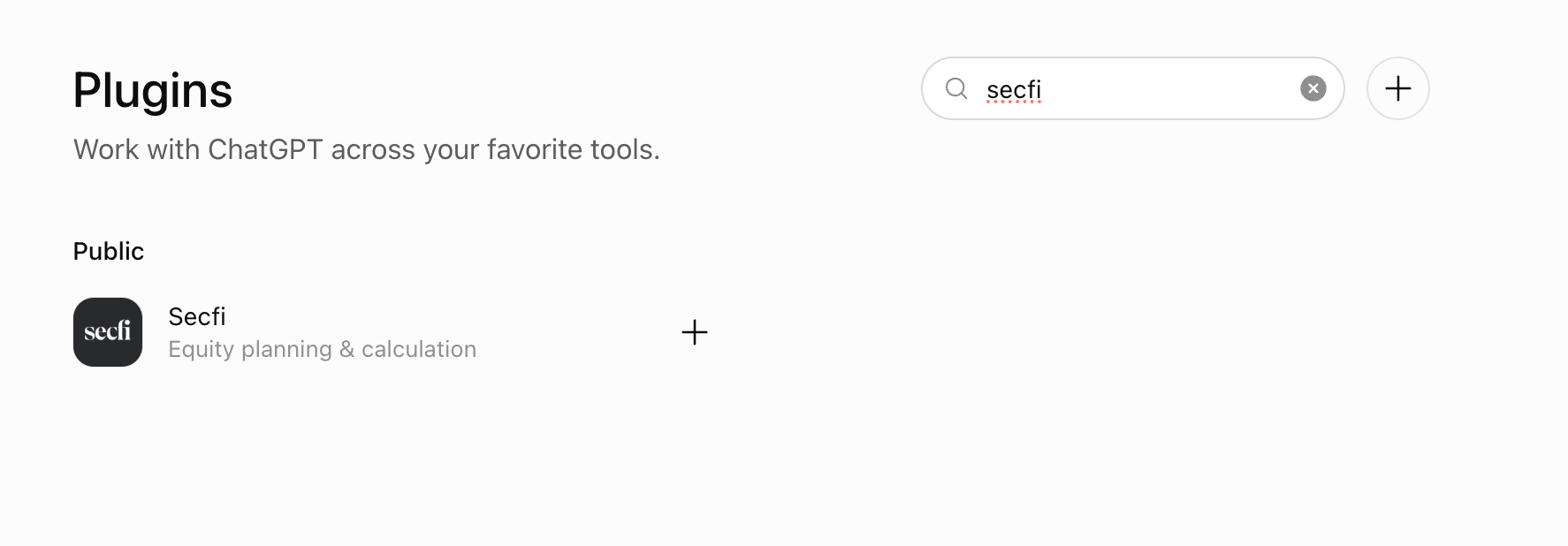
The MCP makes the same underlying equity data and calculation tools available within these your AI assistant.
Once you've connected and authorized your Secfi account, you can ask questions about exercise costs, estimated AMT exposure, and potential outcomes without switching between applications. Your AI assistant can use Secfi's calculations to explore different assumptions, although California residency and sourcing calculations still need to be verified with a qualified tax advisor.
You can learn more in the Secfi MCP server FAQ.
Secfi Wealth’s financial advisors specialize in private-company equity, ISO exercise timing, concentrated stock positions, and broader financial planning.
For example, Sam, an early Stripe employee, and her husband had moved from California to a lower-tax state when they began working with Secfi Wealth.
Sam was deciding whether to participate in a Stripe tender offer on her NSOs. Her Secfi advisor helped her evaluate the tax implications, developing a plan to sell 33% of her Stripe stock and exercise her remaining stock options in a later year when her income was expected to be lower.
The proceeds from the tender offer helped cover taxes, build cash reserves, and diversify their investments while preserving some of their exposure to Stripe's future performance.
This case study is an illustration of our capabilities provided to an individual client. Client results may vary, and there can be no guarantee of similar results. It is not known whether the client approves or disapproves of Secfi Advisory Limited or its affiliates as a whole.
If you're considering exercising your options but don't want to commit a large amount of savings, Secfi also offers non-recourse financing for eligible employees. Depending on eligibility and the agreement terms, this financing may help cover exercise costs and associated taxes while limiting exposure to unrelated personal assets.
Employees who already own eligible private-company shares may also be able to explore a secondary sale as a separate way to access liquidity.
There's no single exercise timeline that works best for every startup employee moving out of California. Modeling your grant details with Secfi's Maeve or MCP can help you understand the potential financial outcomes before committing your savings. As of July 2026, more than 62,000 people have worked with Secfi’s tools or team to help with their equity.
Not necessarily. California may still tax the portion of your ISO exercise-related AMT adjustment attributable to work performed in the state, even after you become a nonresident.
Potentially. Federal alternative minimum tax (AMT) rules apply regardless of where you live, and California may also tax the California-source portion of your ISO spread. However, an AMT adjustment doesn't automatically mean you'll owe additional AMT.
You generally must exercise within three months of leaving your employer to preserve federal ISO tax treatment, subject to certain exceptions. Your company's post-termination exercise window may be shorter or longer, so check your grant agreement.
Yes. Secfi's free AI equity assistant Maeve can help you compare exercise costs, estimated AMT exposure, and potential outcomes before and after your move. A qualified tax advisor should verify California residency and income-sourcing calculations.
The tool shown here uses artificial intelligence and is for illustrative purposes only and not necessarily indicative of future results, and there is no guarantee that similar results can be achieved. The information provided by the tool is not professional advice and is not intended by Secfi, Inc., its affiliates, and Secfi representatives, to be deemed as investment, legal, tax, or other professional advice or recommendations of any kind, or to form the basis of any decision to do or to refrain from doing anything. Secfi does not review the accuracy or completeness of the information provided to us within the tool.