3. We invite you for a ‘we answer all your questions’ call.
Our process is largely automated, but we've found most folks like to discuss financing with a human. It’s a significant decision after all.
Secfi's Equity Strategists have helped hundreds of startup employees maximize the value of their stock options, and they're ready to explain anything equity and IPO-related. (By the way, just use the chat below if you'd like to have a chat with them before signing up ↘️)
4. We send you a detailed financing proposal.
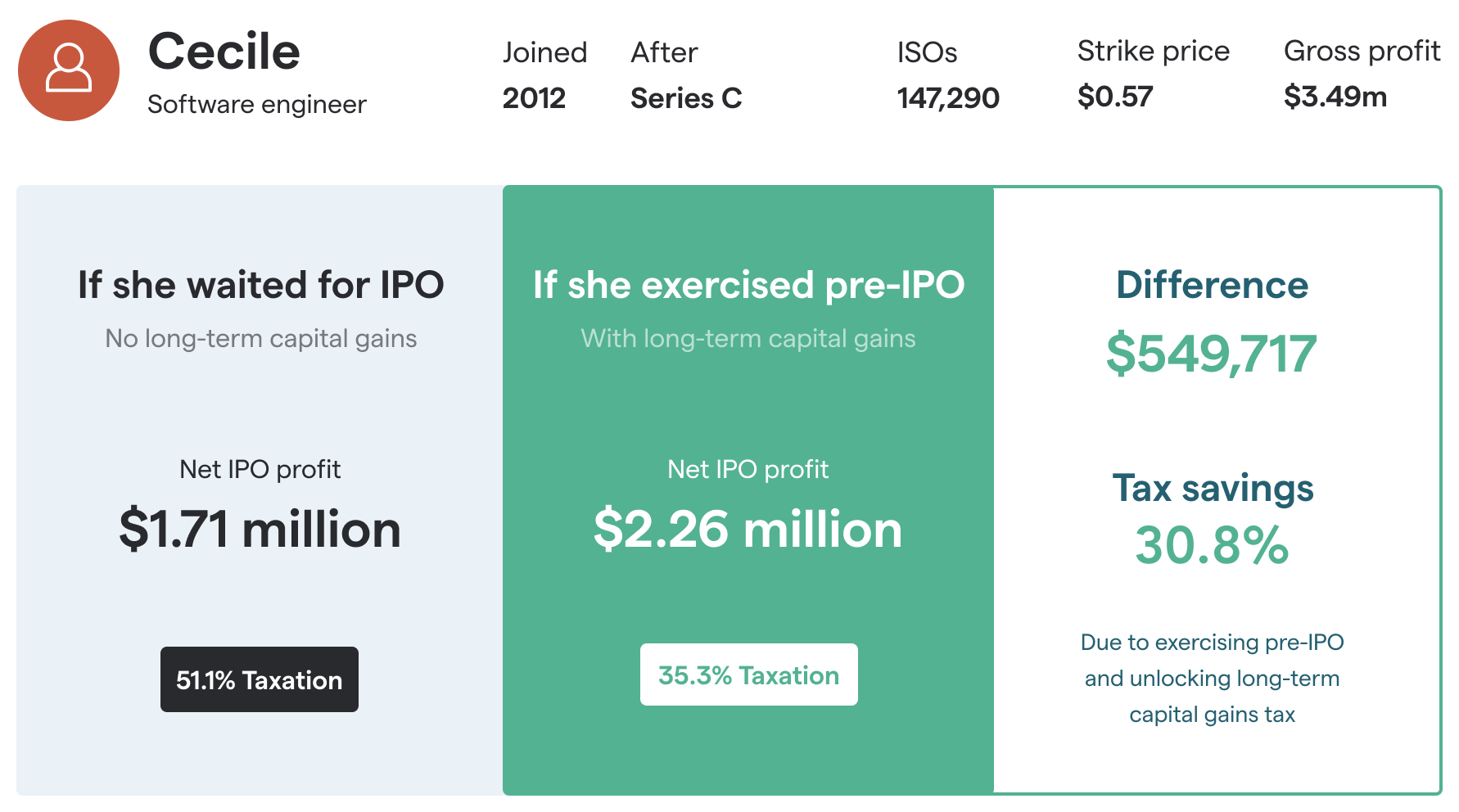
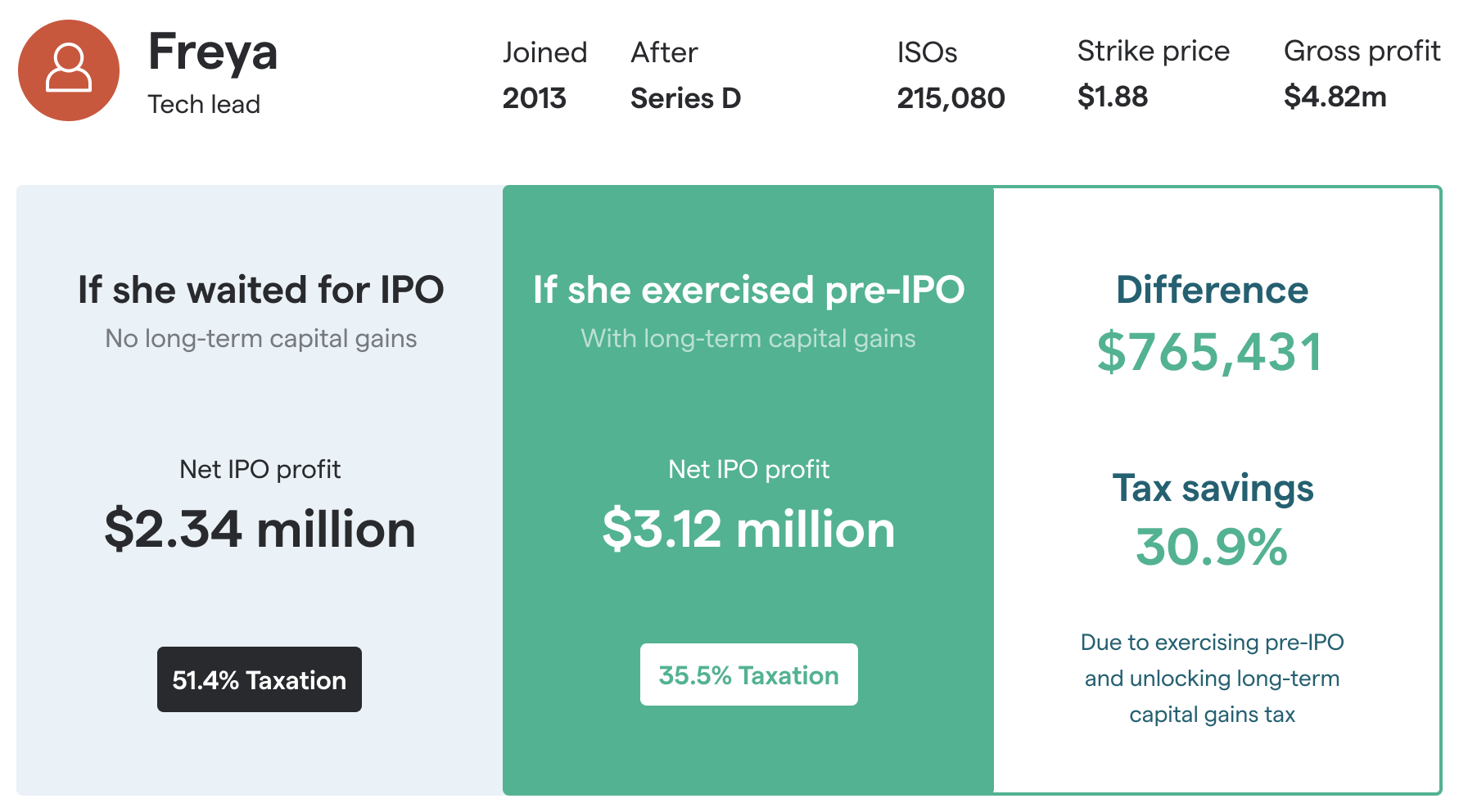
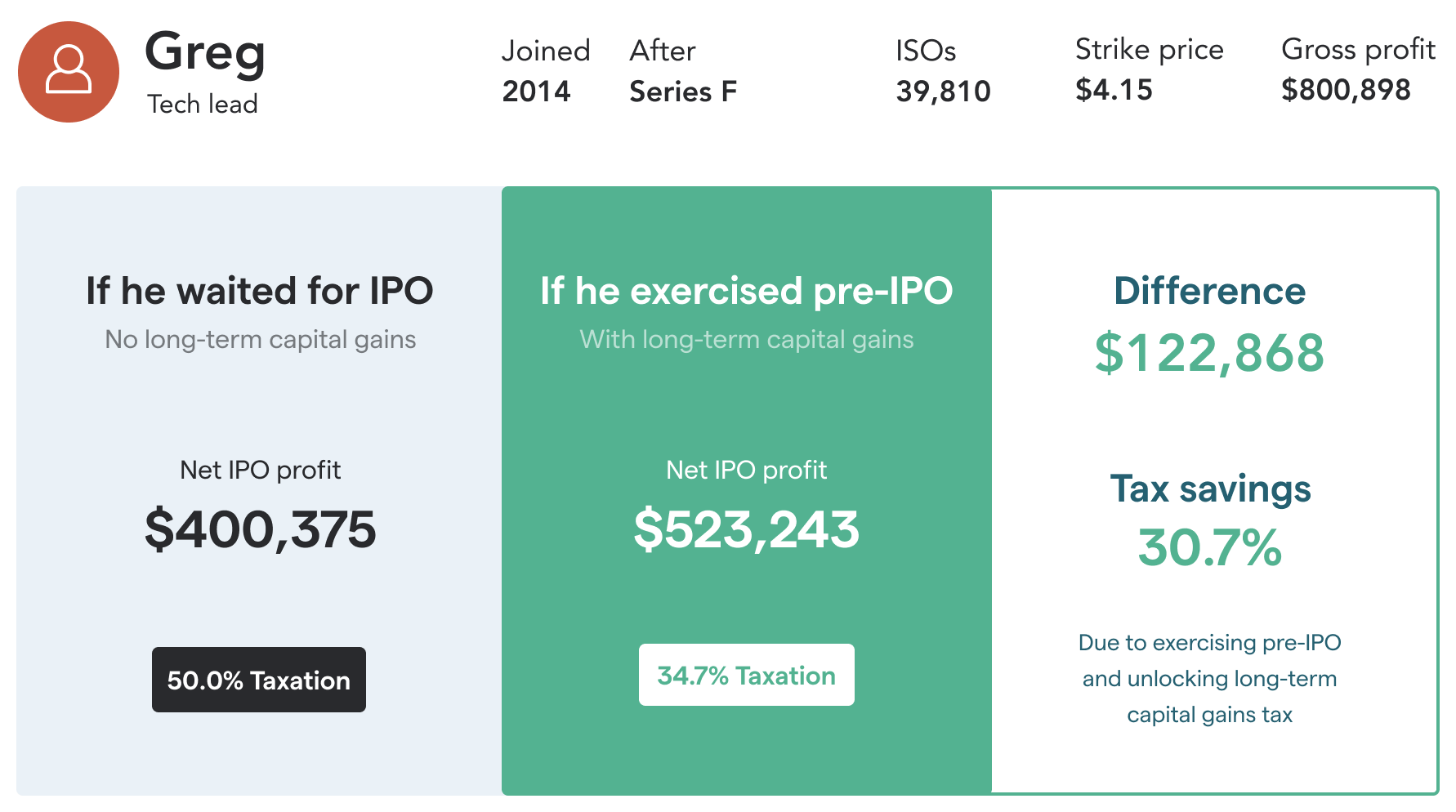
The proposal is catered to your details. It models out your specific scenario and shows your benefit.
This last step normally takes 2-3 weeks, as our investment team does a risk assessment of the company.
However, if you work for one of our pre-approved companies (that includes most unicorns) we can skip this step and you’ll have the proposal in just days. You'll automatically see whether your company is pre-approved when you sign up.
If you're interested in exploring financing, you can sign up and request a proposal here.
So how do long-term capital gains work exactly?
TL;DR:
- Selling shares you’ve owned for < 12 months is taxed as ordinary income
- Selling shares you’ve owned for > 12 months is taxed as long-term capital gains, partially or fully
- The specifics are complicated...
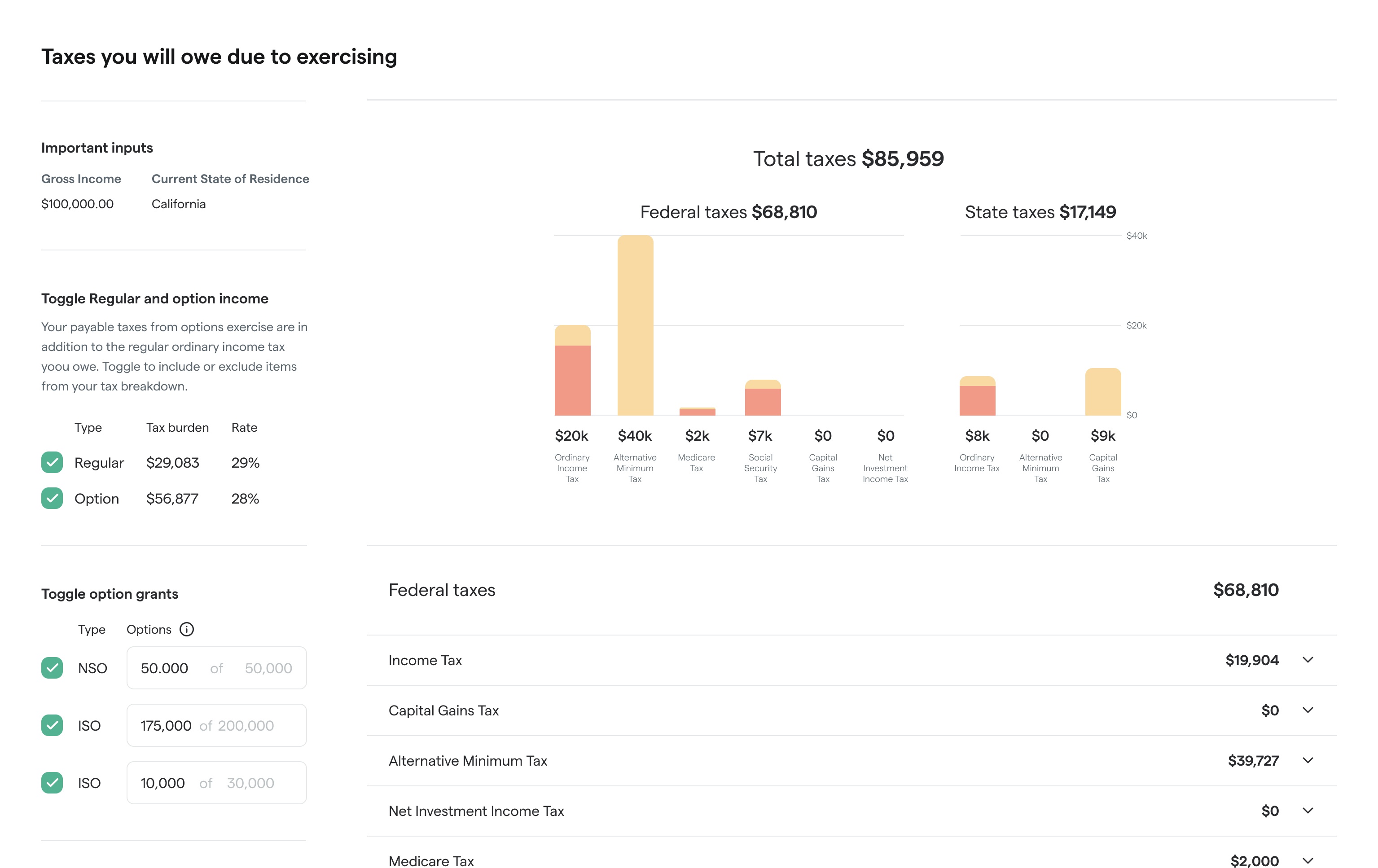
- ...but Maeve happily runs the numbers for you
The specifics:
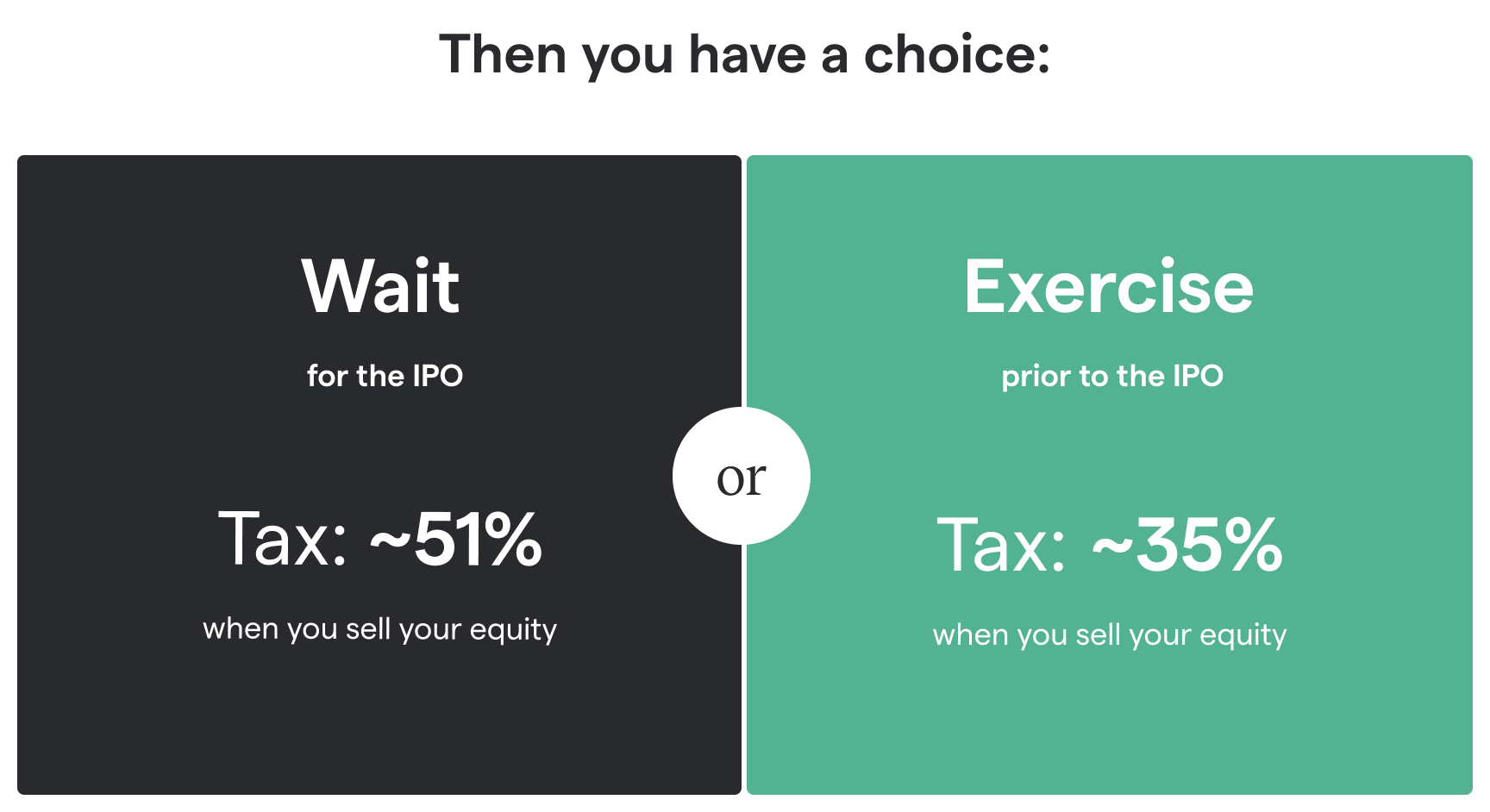
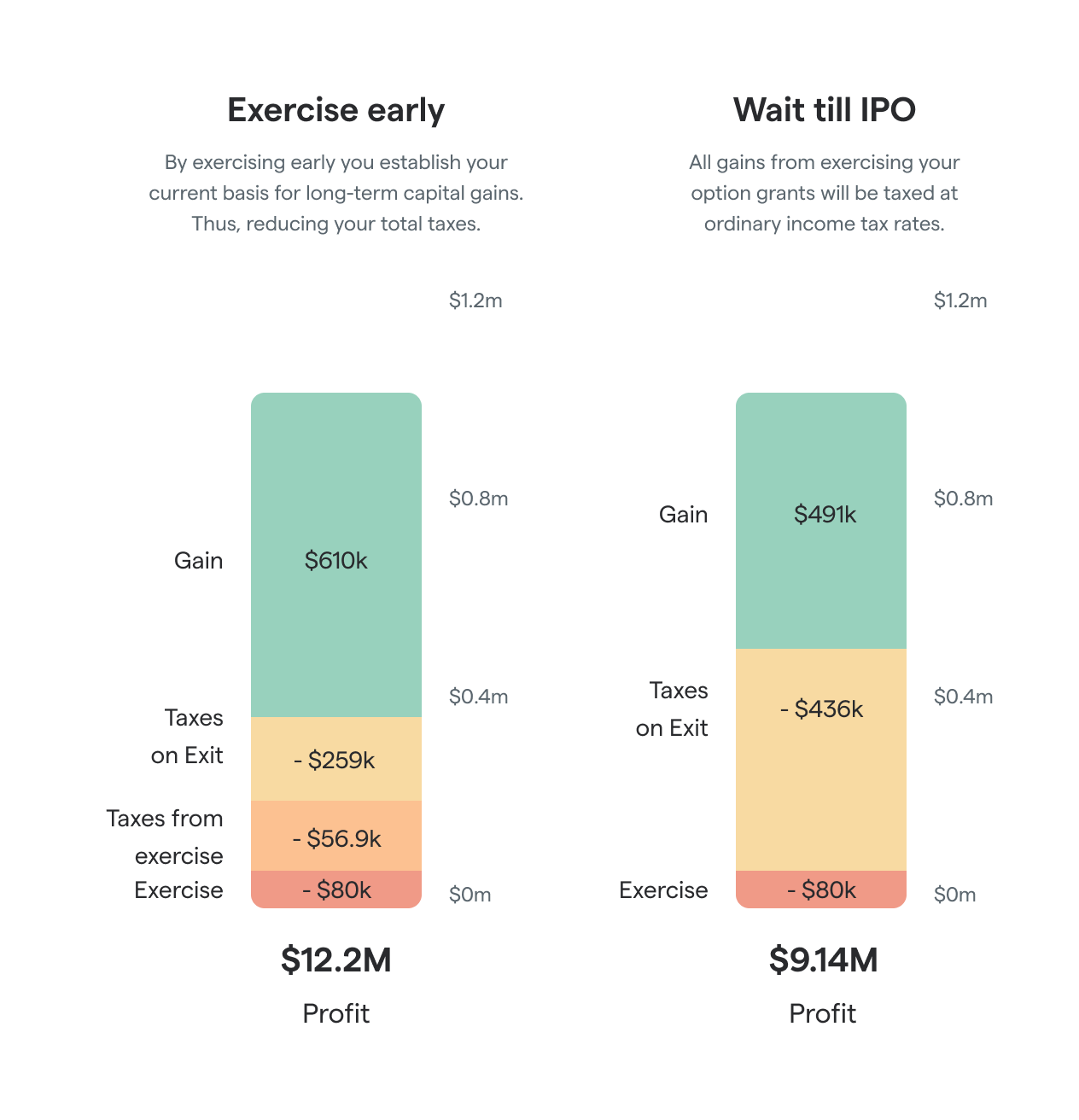
Money you make with stock options is normally taxed as ordinary income. But under the right conditions, it’s (partially) taxed as long-term capital gains. That’s a lower tax rate, meaning your gains could be higher.
These ‘right conditions’ are as follows. For both incentive stock options (ISOs) and non-qualifying stock options (NSOs), if you’ve owned the shares for at least 12 months, the difference between:
- The 409A valuation at the date you exercise, and
- The sell price of the shares
gets taxed as long-term capital gains. In other words, to unlock the tax savings, exercise 12 months prior to selling.
The ‘other part’ of your pre-tax gain, however, will still be taxed as ordinary income. So that’s the difference between
- The strike price of your options, and
- The 409A valuation at the date you exercise
But that part you can get taxed as long term capital gains too, if:
- Your options are ISOs
- The sale is at least 24 months after you were granted the ISOs
- You’ve continuously been employed with the company since being granted the ISOs.
If that’s all the case, your sale is a so-called qualifying disposition and your full pre-tax gain – so that’s the price at which you sell your shares, minus the strike price you’ve paid – will be taxed as long-term capital gains. This is the most advantageous scenario.
Phew! The complexity of the U.S. tax code never ceases to amaze.